A rainforest preserve protects more than the trees within its boundaries. It also protects a place where wildlife, water and long-term research can remain connected.
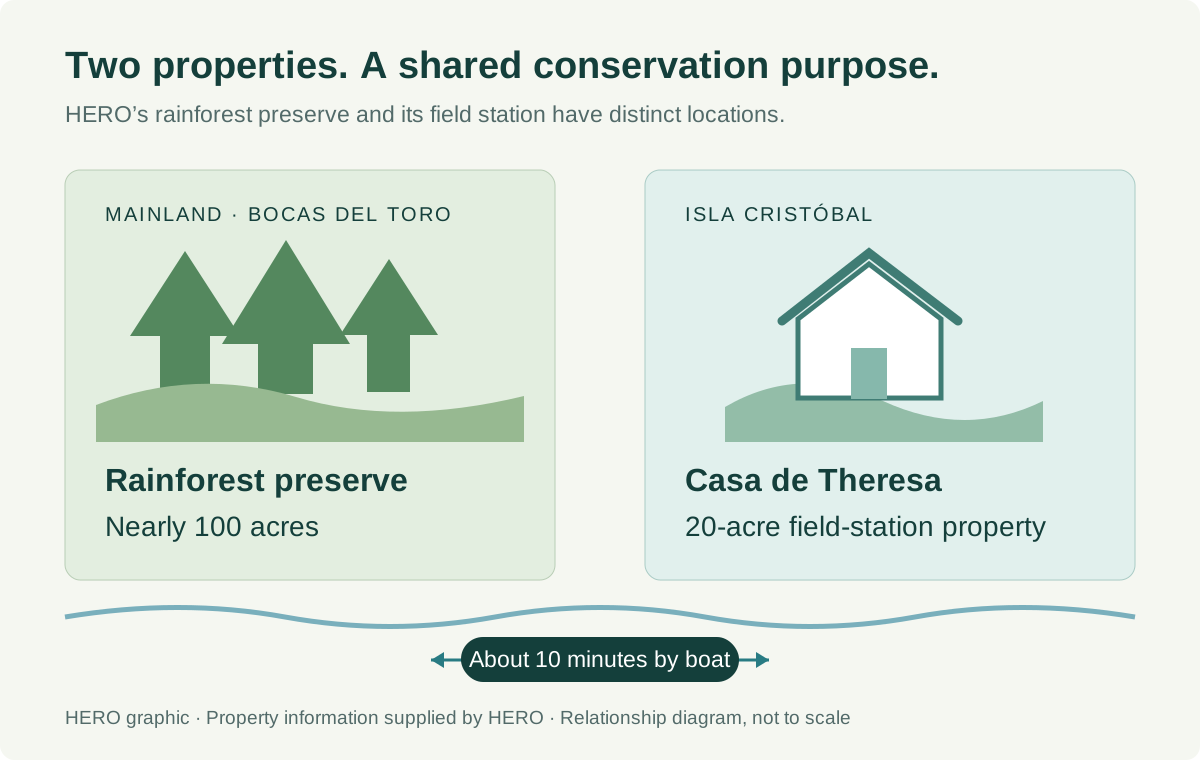
HERO’s preserve covers nearly 100 acres on the mainland of Bocas del Toro, Panama. Its purpose is to keep rainforest standing while supporting research and education about the ecosystems around it. The forest is the conservation property; Casa de Theresa is the separate field station that can help researchers work in the region.
Two properties with different roles
The distinction is straightforward. The preserve is on the mainland. Casa de Theresa sits on its own 20-acre site on Isla Cristóbal, with a coral reef and mangrove harbor in front and rainforest behind. The journey between them takes about 10 minutes by boat.
At Casa, HERO provides a base from which researchers can plan fieldwork and visit the preserve and coastal habitats. The station and its facilities are separate from the protected mainland forest. Researchers can contact HERO to discuss their project, access and the facilities available before planning a visit.
Why a forest matters to the coast
Rain falling on land eventually reaches streams and coastal water. Clearing vegetation or disturbing soil can change what that water carries. NOAA identifies sediment, nutrients and other land-based pollution as major pressures on coral reefs, with deforestation and coastal development among the sources. Protecting forest is one part of caring for the water downstream. NOAA: how land-based pollution affects reefs.
That connection shapes HERO’s River 2 Reef program. Research on freshwater and land use can inform questions about marine habitat, while coastal observations can reveal changes that began farther inland. A preserve gives that work a continuing place to return to.
A place for questions that take time
Useful ecological research often depends on repeated observations: which animals are present, how conditions vary across seasons, and how a habitat responds to disturbance. A protected forest can support that continuity. HERO welcomes discussions with researchers about suitable projects, access and the facilities available at its field station.
The wider Bocas region has a strong scientific tradition. The Smithsonian’s Bocas del Toro Research Station studies marine and terrestrial systems, from coral reefs and seagrasses to the diversity of poison-dart frogs. That regional research provides context for the kinds of connections HERO hopes to help people investigate. It does not mean that every regional study took place on HERO’s preserve. Smithsonian research in Bocas del Toro.
A commitment that continues beyond a donation
A December 2021 report in The Bocas Breeze described Ted Hannig’s donation of rainforest land in Dolphin Bay for permanent ecological preservation. It recorded a commitment built through years of stewardship. Today, HERO’s work carries that conservation purpose into habitat protection, research and education. Read the 2021 report.
The value of keeping a forest intact lies in what can continue there: living habitat, questions that can be revisited, and opportunities to understand the coast over many years. HERO’s aim is to support that continuity while caring for the places that make the research possible.
Property and access information supplied by HERO. Regional ecological sources and the historical conservation report are linked above.