Bocas del Toro
Panama · Caribbean (Atlantic West)

From the river to the reef: a warming planet reaches every ecosystem HERO works to protect.

Climate change, mainly caused by increased greenhouse gas emissions from human activities like burning fossil fuels and deforestation, can be addressed by switching to renewable energy sources, improving energy efficiency, and adopting sustainable practices in transportation, agriculture, and industry. HERO has joined this effort to promote a healthier marine ecosystem.
A warming ocean sits behind nearly every threat HERO works on — bleaching reefs, stressed forests, shifting fisheries. Rivers carry the effects of a changing climate to the reef just as they carry sediment and runoff.
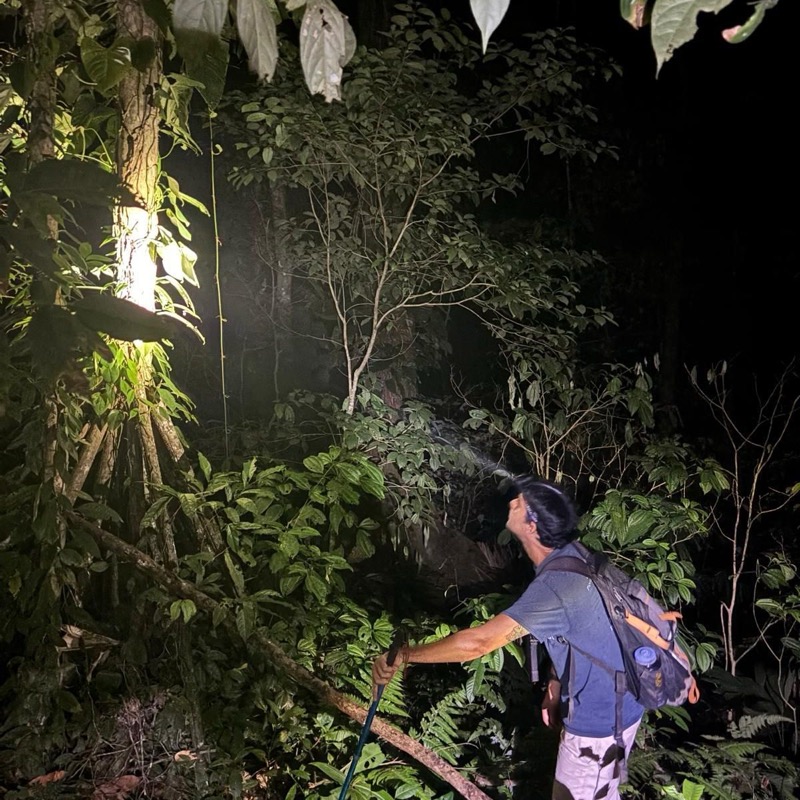
Bat research can help us understand how wildlife responds to a changing climate. HERO is exploring support for long-term bat research at Casa de Theresa, its field station on Isla Cristóbal.
Read about the bat study →
This program emphasizes environmental issues affecting both our freshwater and saltwater ecosystems, particularly the often-overlooked impacts that freshwater sources have on saltwater coral reefs. HERO is committed to researching and understanding the link between freshwater activities, such as agriculture, and our fragile reefs that receive runoff from rivers.
River to Reef aims to develop educational programs and resources on best practices for activities such as farming to prevent damage to rivers and reefs. A primary focus is on Panama's freshwater ecosystems, where discharges from coffee farms have harmed aquatic life due to the presence of coffee bean pulp.
Field notes and articles from HERO Advisory Board member Dr. Daniel Medina on rivers, reefs and the life that depends on both.
Articles will appear here when they are available.
HERO Advisory Board
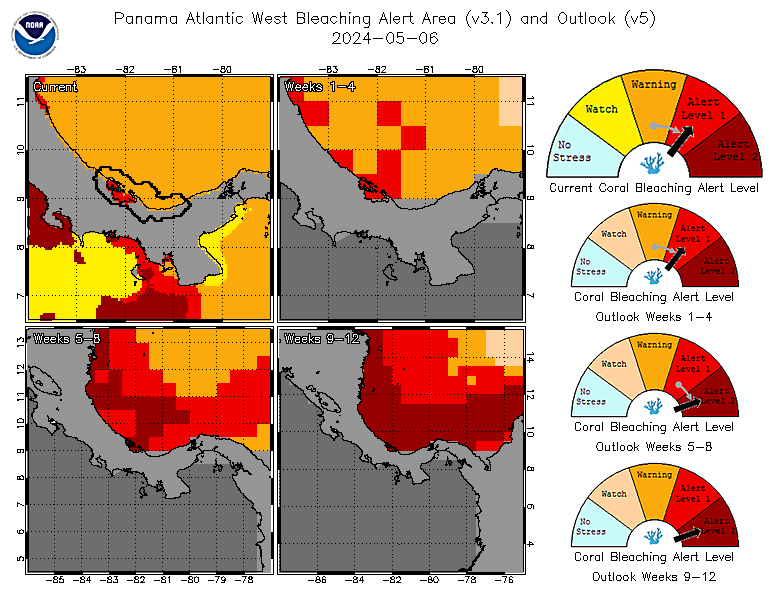
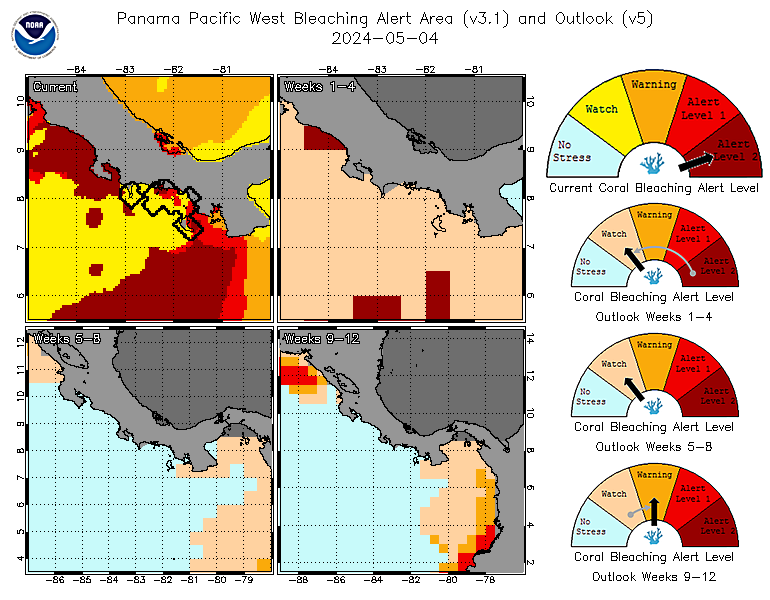
Updated every day from NOAA satellites and ocean buoys. Warm water is the main cause of coral bleaching — the colored alert shows how much heat stress the reefs are under right now. Press History to see the graphs.
Why a hotter place can have a lower alert. Corals are adapted to the water where they live. The alert is not based on today's temperature alone. It measures how far the water has stayed above that reef's normal hottest month, and for how many weeks. NOAA adds this up as heat stress in "degree heating weeks": one week at 1°C above the normal maximum counts as 1. Around 4, bleaching is likely; at 8 or more, severe bleaching and coral death are likely.
So Bocas del Toro can read 30°C and only rate a Warning, because its reefs normally see water that warm. A Pacific region at a slightly lower temperature can rate a higher alert, because that is well above its normal and has lasted for weeks.
Bleaching alert scale (NOAA): No stress → Watch → Warning → Alert Levels 1 to 5. Panama readings are satellite estimates for each region; the San Francisco reading is from a buoy in the ocean.
Panama · Caribbean (Atlantic West)
Panama · Pacific West
Panama · Pacific East

California · NOAA buoy 46026, 18 nm west of San Francisco

A look at The Ocean Cleanup’s river interceptors, ocean cleanup technology and 2026 plans, including Panama City — with a video of its Guatemala projects.
Read more →Coral bleaching on Panama's Pacific reefs is getting stronger and lasting longer, with the current El Niño bringing heat stress and color changes to coral species that had stayed stable for the past 15 years.
Read the original ↗It turns out that everyone needs a HERO — even our environment. Every gift supports research, rainforest protection, marine justice, and free resources for students.
Donate today