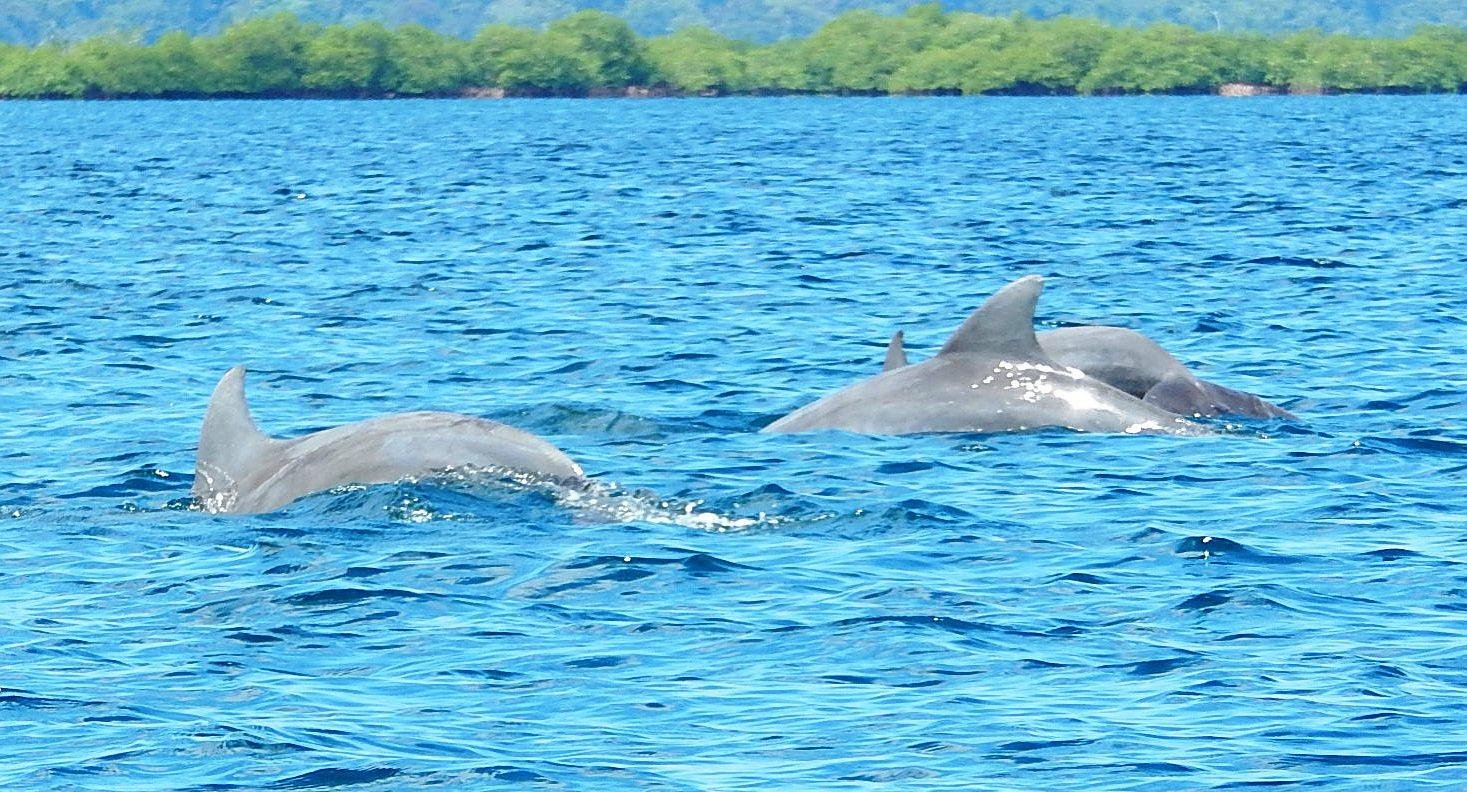
A dolphin surfacing beside a boat can be the highlight of a visit to Bocas del Toro. For the dolphins that live here, those encounters are part of everyday life—and the way boats behave matters long after a tour ends.
Dolphin Bay, also known as Laguna Bocatorito, is a place where bottlenose dolphins feed, socialize and raise their young. HERO’s interest in protecting them connects its mainland rainforest preserve with the health of the surrounding coastal environment. Ted Hannig’s proposal is to pair habitat protection with patient observation, useful records and greater accountability on the water.
A resident community with limited room for loss
Research published in 2017 found that the Bocas del Toro dolphins are genetically distinct from other Caribbean populations. The study described a small, isolated population, drawing on an earlier estimate of about 80 animals across the archipelago. That historical estimate should not be read as a current census, or as the number found in Dolphin Bay at any one time. Read the genetic study.
The International Whaling Commission’s Bocas case study distinguishes the wider regional population from a smaller community with strong attachment to Dolphin Bay. It also identifies the inner bay as an important area for mothers and calves. Repeated disturbance therefore reaches animals using a familiar home range, rather than an endlessly changing stream of visitors. IWC: dolphin watching in Bocas del Toro.
The costs of a close encounter
Boat impacts extend beyond the risk of a propeller strike. In a study published in 2020, researchers found that dolphins spent less time feeding and more time traveling when tour boats were present. Social activity was also interrupted. A brief encounter for passengers can become one of many interruptions for an animal trying to find food or remain with its group. Research on tour boats and dolphin activity.
Noise adds another pressure. Research on Bocas dolphins found changes in whistle characteristics around dolphin-watching boats. Sound helps dolphins maintain contact, making the acoustic environment part of their habitat too. Research on boats and dolphin communication.
Physical harm has also been documented. In its 2017 account of the genetic research, the Smithsonian reported dolphin deaths from local boat collisions. Protecting the population requires attention to both visible injuries and the repeated disruption of normal behavior. Smithsonian: boat traffic and Bocas dolphins.
A proposal for observation and accountability
Ted’s vision includes a dedicated observation station to document dolphin behavior and boat interactions without adding another vessel to the group. This is a proposed conservation tool. It would need an appropriate location, trained observers and a consistent method for recording what happens.
Useful records could include the time, location, number of boats, approach behavior and the dolphins’ response. Photographs or video could support education and, where appropriate, reports to the responsible authorities. Enforcement decisions would remain with those authorities; the purpose of observation would be to supply clear, reliable evidence.
Protecting a bay people can still enjoy
Responsible viewing gives dolphins space and allows feeding, resting and social behavior to continue. Visitors and operators can help by following current local rules, avoiding pursuit or encirclement, and declining to crowd a group for a closer photograph. The IWC’s case study emphasizes the need for management, monitoring and cooperation with the tourism community.
Healthy coastal habitat matters as well. HERO’s preserve protects nearly 100 acres of rainforest on the mainland. Casa de Theresa, its research base, occupies a separate 20-acre property on Isla Cristóbal, about 10 minutes away by boat. Keeping that distinction clear helps explain how protected land, a field station and work on the water can support one another.
Adapted from Ted Hannig’s conservation proposal. Research findings are dated and linked above; the observation station is described as a proposal, not an operating facility. Property and program details were supplied by HERO.